

Beyond Repair: Suling
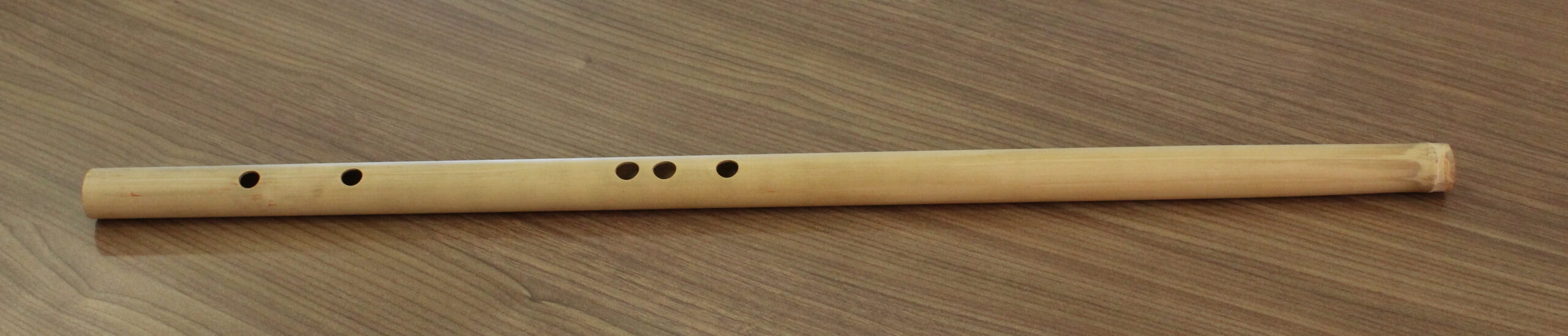
The suling is an end-blown flute from Indonesia, made from bamboo. Like the other instruments in the Javanese gamelan, sulings are tuned to one of two scales, sléndro or pélog.
The suling is an end-blown flute from Indonesia, made from bamboo. Like the other instruments in the Javanese gamelan, sulings are tuned to one of two scales, sléndro or pélog.
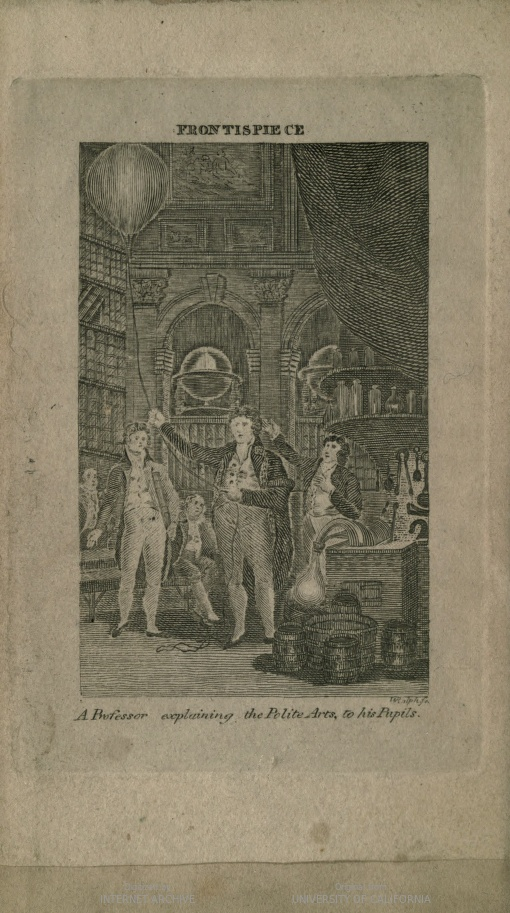
Enlightenment ideas about science and philosophy take center stage in this small book of lectures presented to children by a boy called Tom Telescope, the “little philosopher.” The pseudonymous Tom explains complex concepts through conversation and demonstration with “familiar objects, in an entertaining manner, for the use of young ladies and gentlemen,” as made clear in the publication’s subtitle.
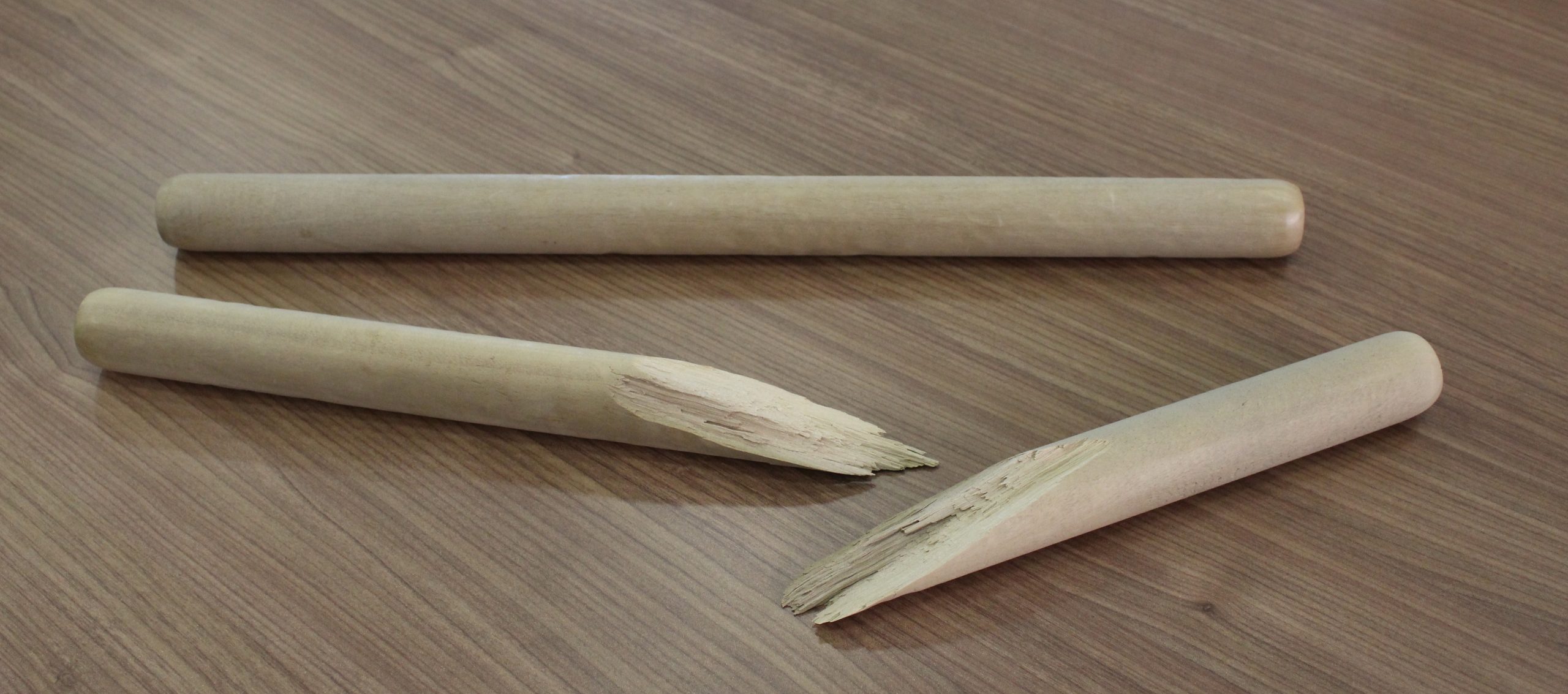
In Japanese taiko drumming, wooden sticks called bachi are used to hit the head of the drum. Taiko drums come in various sizes from the small, high-pitched shime-daiko, to the mid-sized chu-daiko, to the large, lower-pitched o-daiko, and each of these requires a different size of bachi.
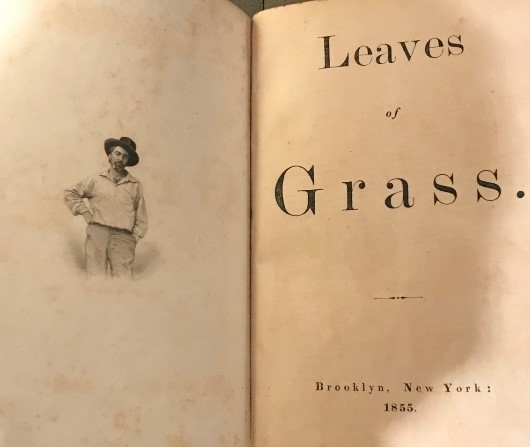
It was two years ago, April of 2019, that I first came to the Special Collections and Archives. I was a pre-frosh at WesFest, awkwardly wandering across campus with a wrinkled assortment of info sheets and campus maps. The disorienting stream of events and people left me with a nagging sense of worry: maybe Wesleyan wasn’t the place for me, maybe it was all too much.
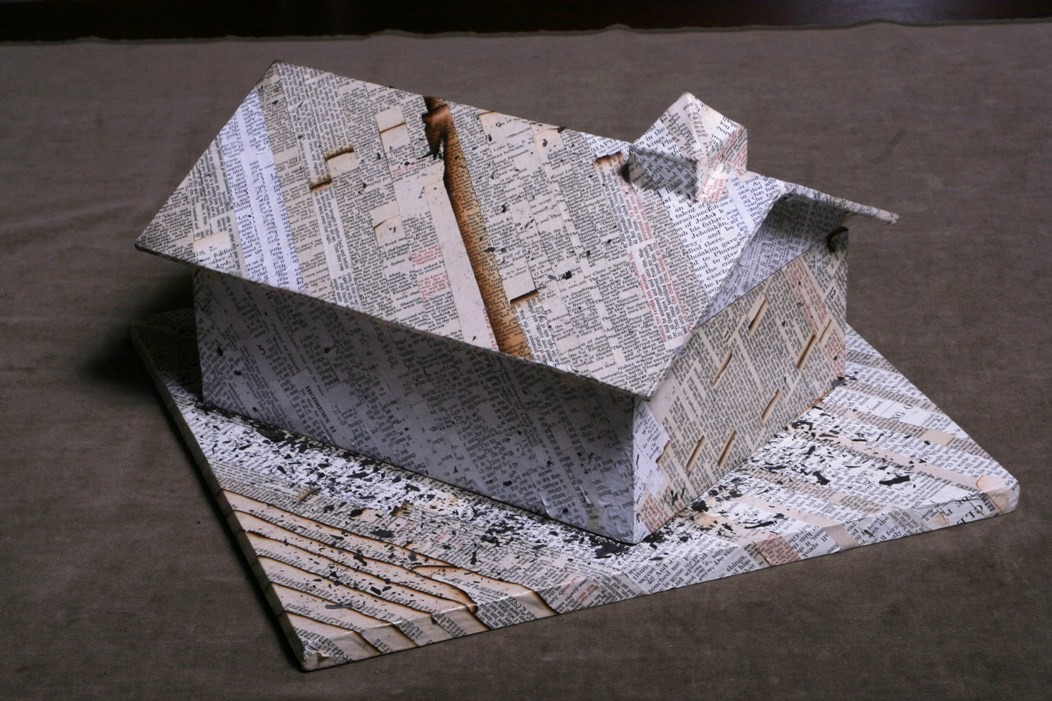
Ashes refer us to the fire, indexing words we cannot read. They document what has been lost forever. As light as air, ashes flutter with a breath, they degrade, they will not last. Ashes tell us what has survived, what can be rebuilt, and what is irrevocably altered. Ashes bear witness.

On Tuesday, May 11, 2021 at 6 pm, the library will celebrate the winners of the 2020 Wesleyan Library Undergraduate Research Prize at a virtual event, which will begin with a talk by Wesleyan Professor of History Ronald Schatz
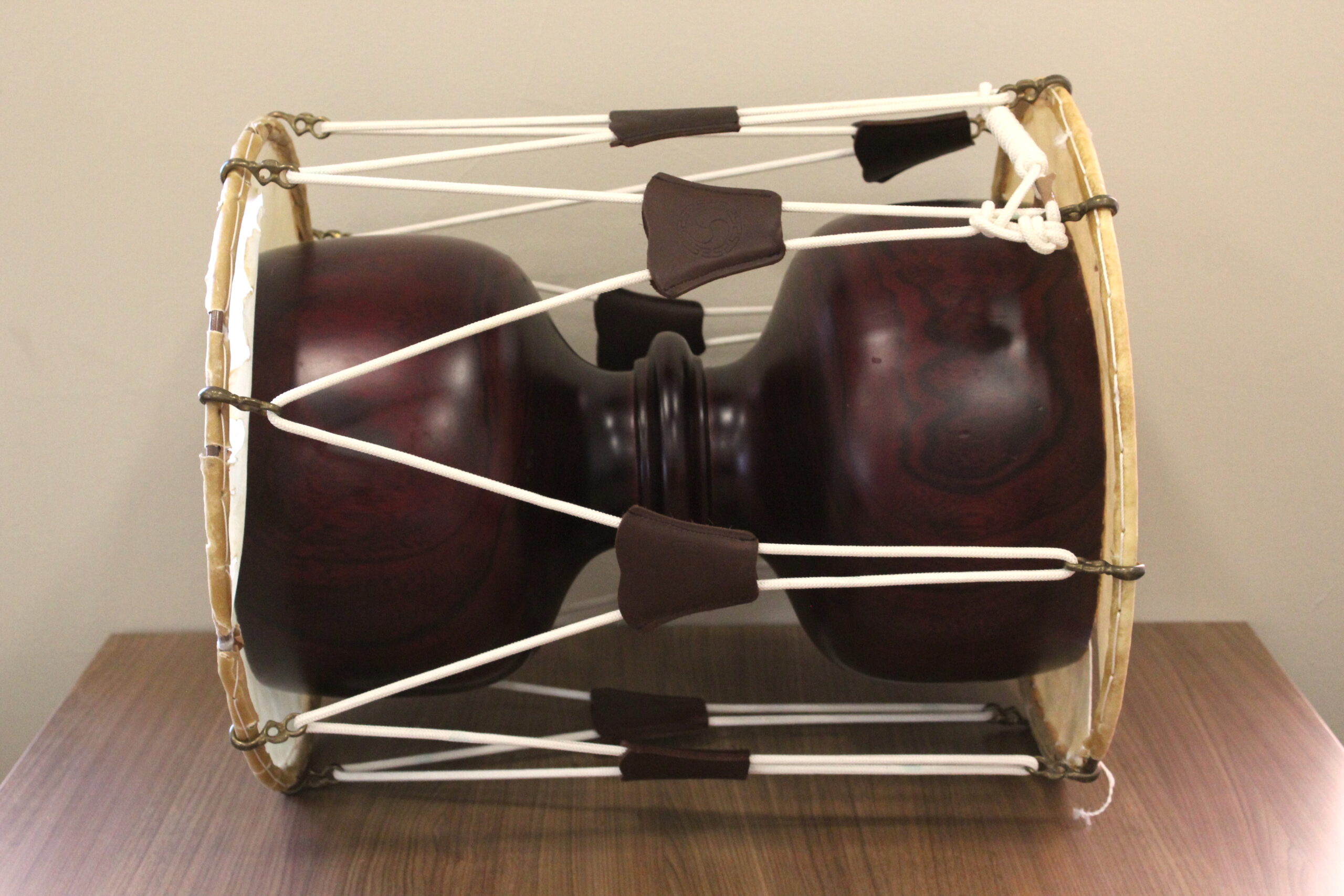
About the instrument
The janggo, or janggu in folk styles, is a Korean drum, perhaps the most prominent of Korean percussion instruments. The body is carved into a hollow hourglass shape from a solid piece of paulownia wood, and stretched pieces of animal skin are fastened to metal hoops to form the heads on either side.

It’s been just over a year since the University Archives first asked for your experiences related to COVID-19. Thank you to all those who responded – we’ve been slowly adding all the submissions to our Digital Collections! We have a new project aimed at the whole Wesleyan community to learn what this year has been like. … Read more
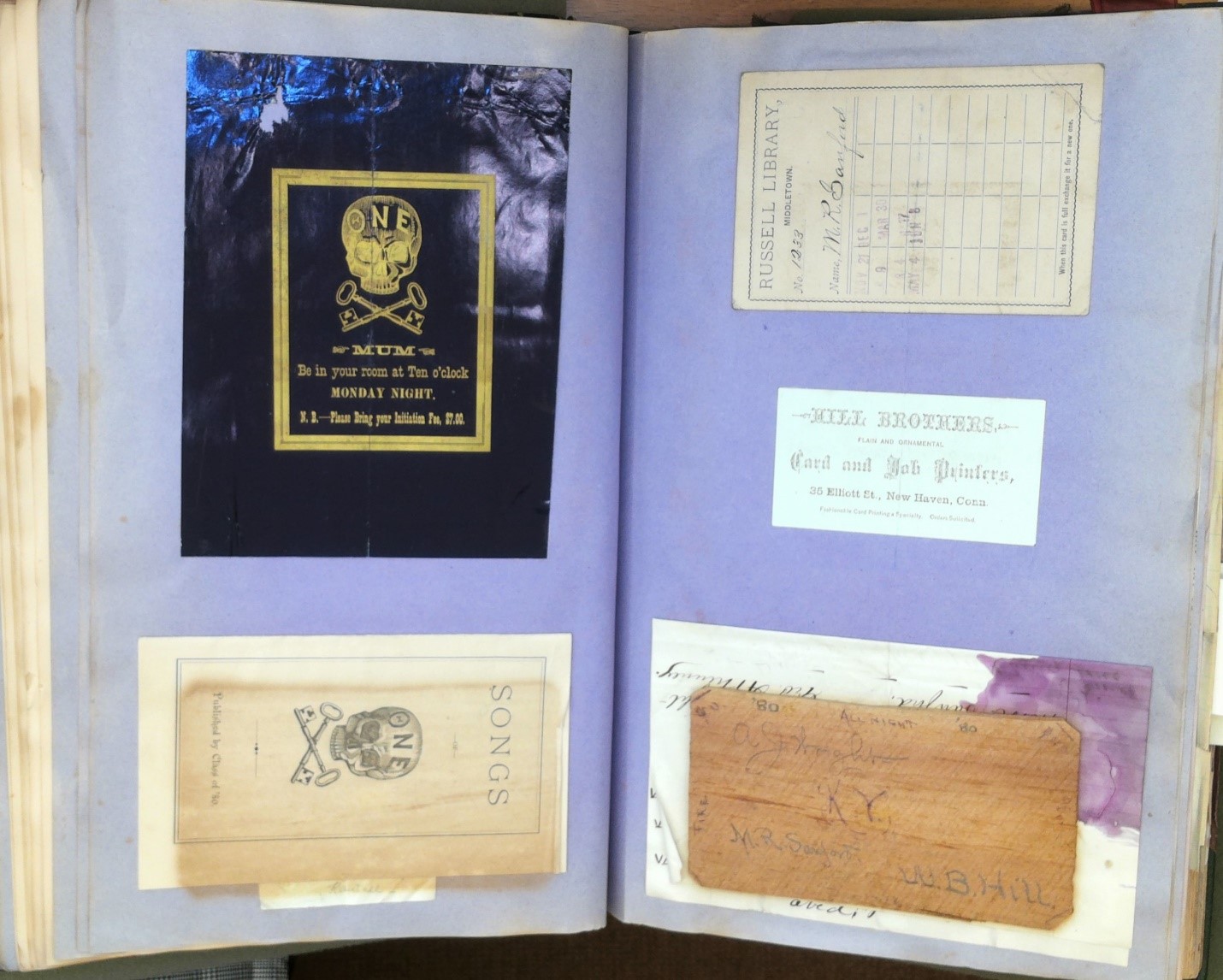
Scrapbooks are repositories of ephemera, containers of memories, self-curated collections of the meaningful bits and pieces of a life. Creating scrapbooks was a popular pastime for American college students from the 1870s until World War I.
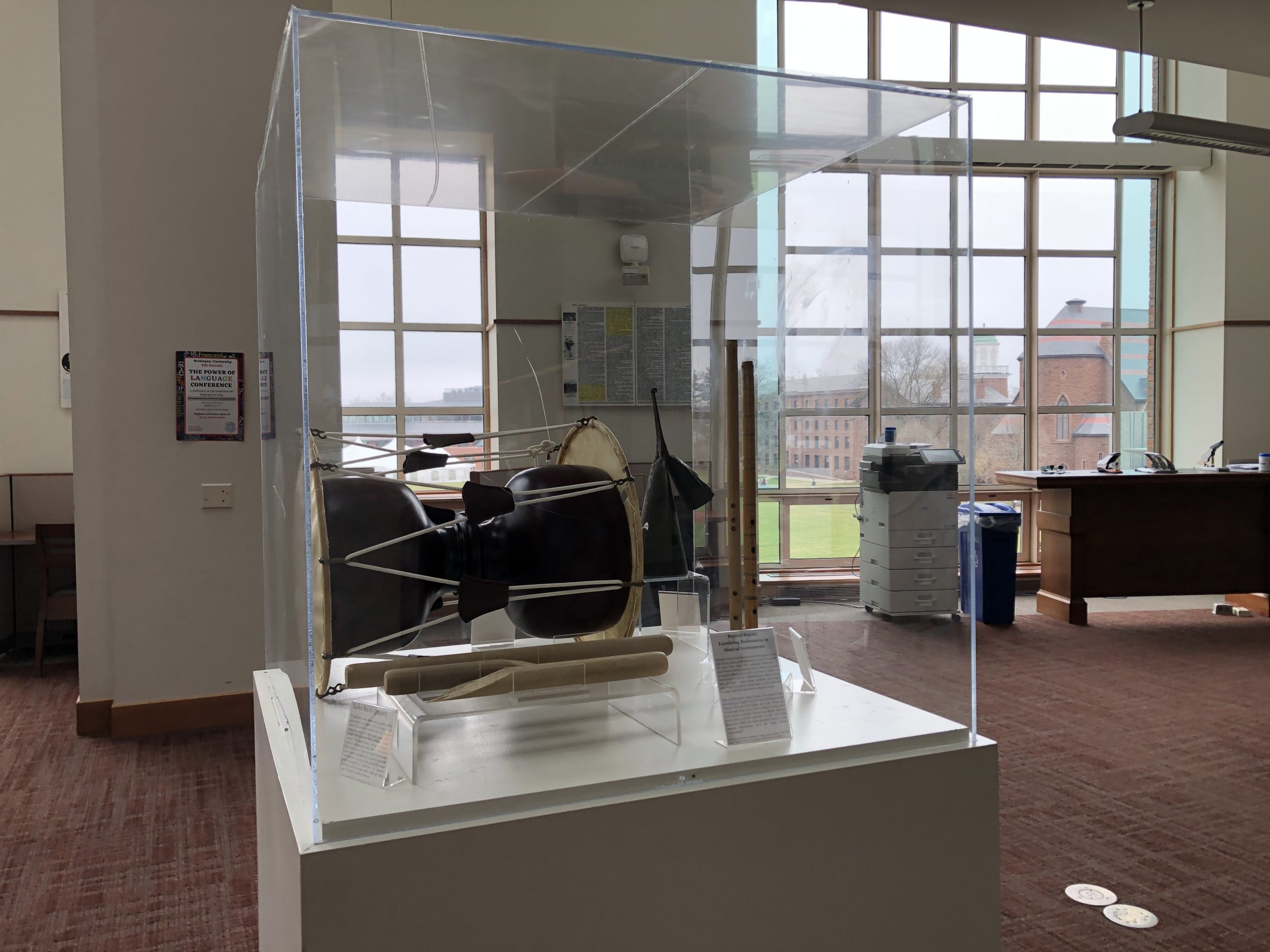
Musical instruments are designed to be played: to be hit, struck, blown, and handled by humans in a variety of ways. Over time, this repeated interaction in combination with environmental conditions can have a tangible effect. Just as with any physical object, an instrument’s material – whether wood, metal, animal skin, or other – wears down, weakens, and breaks over time. Sometimes these issues can be fixed, but in other cases the instrument is beyond repair.