

October 12-18, 2026
AV Exhibit Space (Olin first floor, east corridor)
Olin Library, 252 Church Street, Middletown
This semester nine sequential installations celebrate the release of the album “Independent Declarations” by Noah Baerman, Director of the Wesleyan University Jazz Ensemble, in collaboration with alumni of Wesleyan and of the Center for Creative Youth. This installation presents the composition “We Are Home” by Chad Selph.
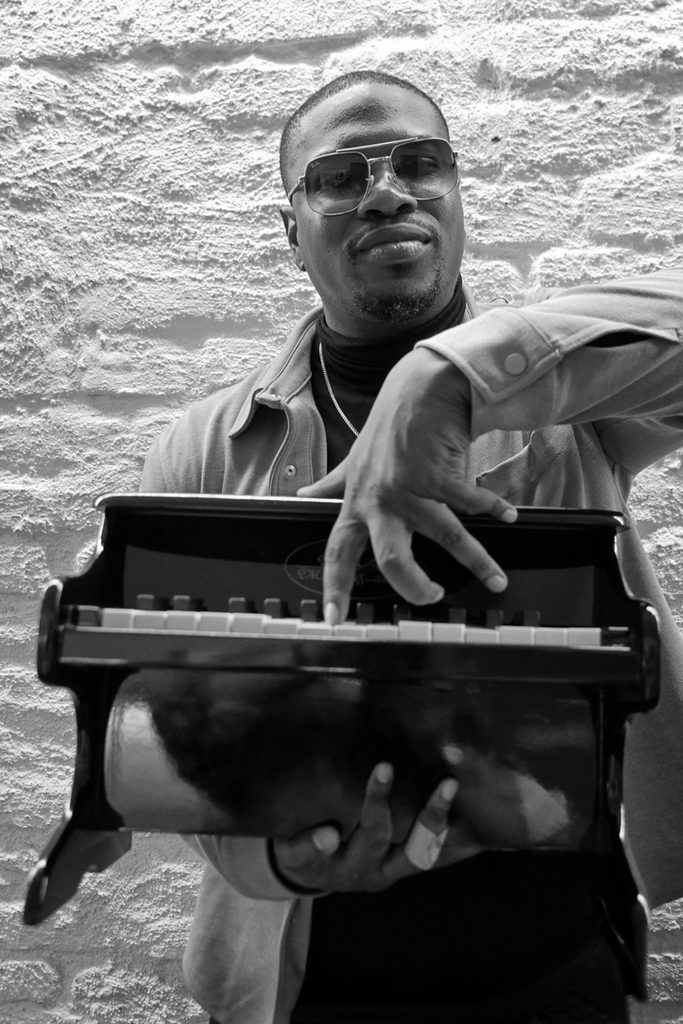
Chad Selph (Asar the Ambassador) is a keyboardist, composer, bandleader, and Middletown High School and Center for Creative Youth alumnus based in Jersey City. Selph, co-leader of the New York progressive R&B/jazz fusion group Freelance, declares the song to be “a lullaby of reassurance, an anthem of resistance, and a declaration that redefines old narratives” before stating “our new narrative is simple: Black Americans belong here.” For this performance Baerman played piano and organ and was joined by Connecticut based vocalist Erica Tracy, Massachusetts based drummer Nate Mondschein’12 (Best Mann), and New York based vocalist, producer, and multi-instrumentalist Spencer Hattendorf ‘12 (Spencer H), here playing saxophone and electric bass, for a session in West Springfield, MA at Ghost Hit Recording. Tracy’s voice soars and weaves through the Latin-tinged neo-soul interpretation with an expansive organ solo by Baerman.
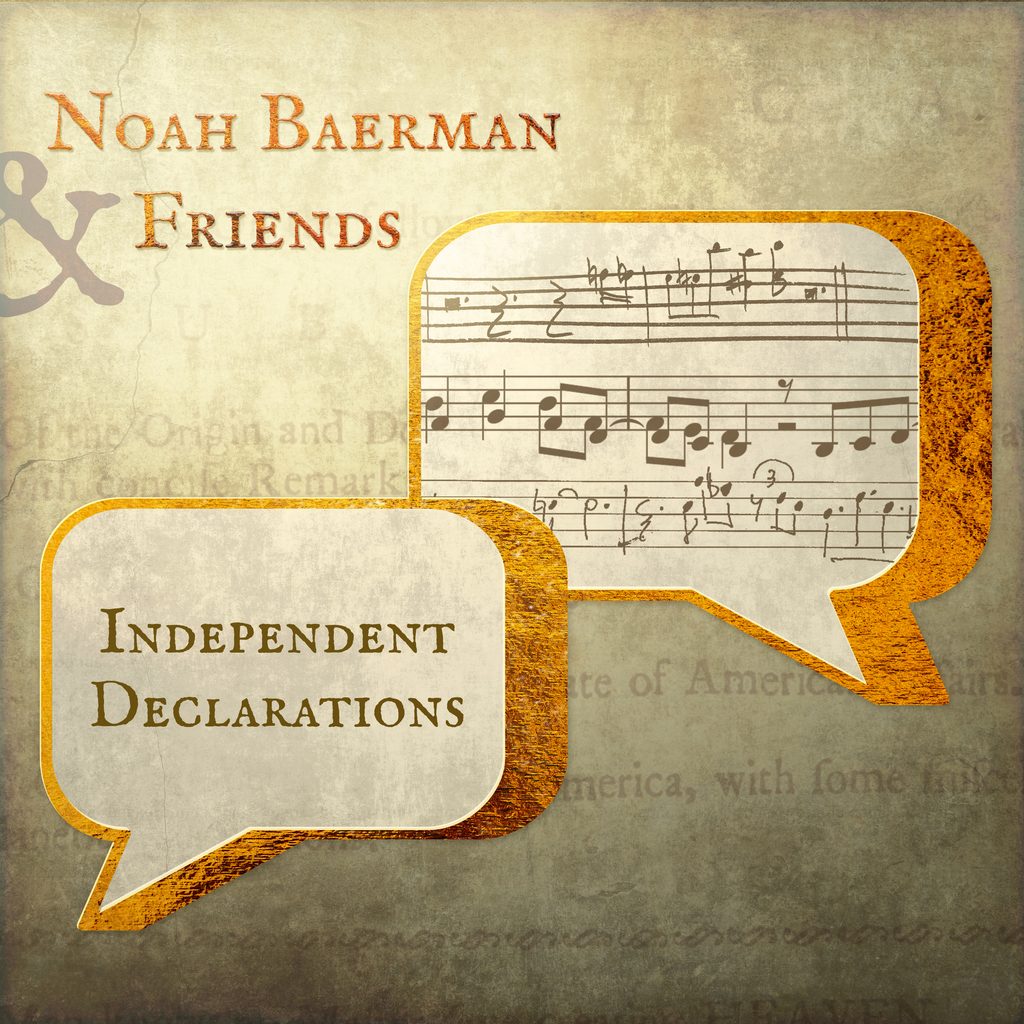
This installation is being mounted in tandem with the October 16 release of Independent Declarations by Noah Baerman and Friends, a collaborative musical project serving both as celebration of the 250th anniversary of the Declaration of Independence and the document’s ongoing relevance. Baerman, pianist, Wesleyan faculty member, and Artistic Director of the nonprofit Resonant Motion, enlisted fifteen musicians, ranging in age from early twenties to late forties, who had studied with him at Wesleyan University or at the longstanding summer program Center for Creative Youth (CCY). Nine of Baerman’s former students from these programs were commissioned to compose new works reflecting on the present-day relevance and impact of the Declaration of Independence. These composers are diverse in musical practice and philosophy, yet were all tasked with the common task of using the Declaration of Independence as a jumping off point. To bring these compositions to life, Baerman brought together two ensembles, each also made up of former students from these programs.
This was a novel experience for Baerman in the sense that, while ostensibly serving as the bandleader and producer, he let go of his standard practice of arranging and organizing the musical interpretations of the material, instead letting that process unfold communally in the recording sessions with an underlying trust in each performer in terms of preparedness, humility, and musical understanding. According to him “the experience of bringing these compositions to life was such a moving example of how collective action can result in a whole greater than the sum of the parts. So often in both musical collaboration and governmental democracy, the representation of different voices does not actually result in a truly openhearted sharing of ideas. I was heartened that, in spite of the potential sense of hierarchy since I was once their teacher, these musicians all brought their full selves to the table and made the music into something I could never have fully conceived on my own.”
In addition to the artistic stimulation of working with these creatively potent musicians, it was inseparable from the overall ethos of viewing the impact of a document once it leaves the hands of whoever formulated it. In Baerman’s words, “in the same vein that modern-day citizens and governments must contend with how to embody the Declaration of Independence in a manner that is at once faithful and relevant to the present moment, the composers involved in this process had to contend with the process being out of their hands once they passed the compositions along, and the performers had to contend with doing justice to that music while also being true to their own musical values and sensibilities.” The focus on Baerman’s former students as composers and performers serves as a further representation of the intergenerational alliances and torch-passing that we hope to see in society writ large.
This project was made possible by a Semiquincentennial grant from the Middletown Commission on the Arts and by the generosity of Resonant Motion’s donors. The installation is sponsored by Wesleyan’s World Music Archives & Music Library (WMA&ML). Email wma@wesleyan.edu for more information.
Follow WMA&ML on Instagram.